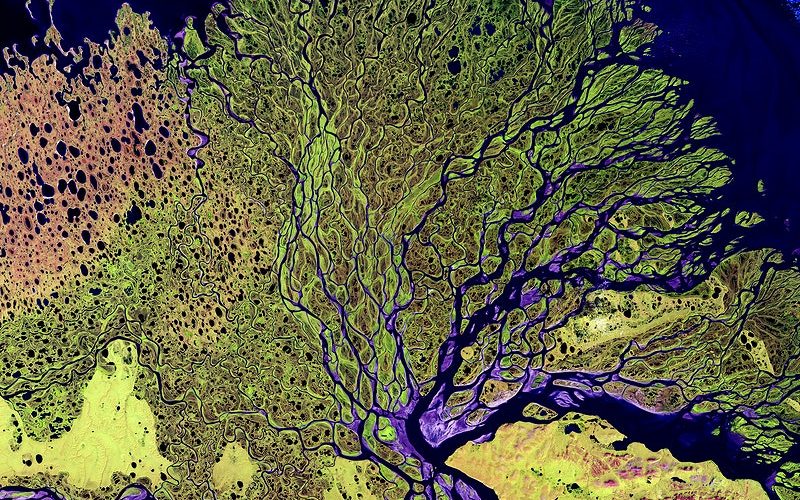
I am very much experiencing wanting to process through what is coming up for me here, beginning with the question of whether complex technology is inherently violent since it requires centralized specialized, inefficient distribution. So, I am questioning whether
- the existence of structural violence is omnipresent, and we should practice discerning and addressing each instance of it like a whack-a-mole, in an infinite struggle…
- we should reconsider technology to avoid its structural violence (in which case would the refusal to reproduce structural violence actually reduce people’s standard of living to such a degree that the alternative to structural violence is comparatively more violent);
- the probability of structural violence and other violences can be eliminated/reduced as much as possible by addressing the structural conditions and systemic causal factors, in which case it looks like what.
It seems to me there is a degree of structural violence in both wild and domestic nature, all the way back to how energy is simply not equitably distributed throughout the cosmos; so in reality, that inefficient distribution that defines structural violence originates in the (“mis”)distribution of energy over space through time – in which case, the disequilibrium is perhaps itself an engine for dialectic, conflict, and the possibility for novelty and creative resolution.
—
I’ve been choosing the water temple to do my nature journal. This is a place I come to with students and I am able to write a few things down. Some things coming up:
- The bioregional survey we are asking students to contribute to
- The bioregional quiz it is based on.
- The bike rides we take to get here
- The socioecological processing we do (grief, death, life)
- Symbiosis: bees/flowers
- Names, meaning, use, gifts invited?
- Octopus teacher
- The orange day
All events seem to convey a place based wisdom. The octopus adapts its intelligences to the world as interior/exterior breaks down, energy flows into its final predator (shark) and generational wisdom remains embodied in memory and its influence on the present. “It’s all so vulnerable,” I remember repeating with tears running down my face. Trying to consider the causal factors for an emotional breakdown:
- Vulnerability of wild spaces (inherent value)
- 70% species dead
- Developing Integral ecological consciousness
- Reading Mourning Nature, Earth Emotions, and opening myself up to ecological sorrow
- 10+ years immersion in the subject since physiological response to concept of climate destabilization and biospheric collapse
- Research in cases where tree defenders, water defenders, land defenders are prosecuted as terrorists to plead down jail sentences
- Activists being killed all over the world in defense of land and ecosystems
- Not knowing what power I have
- Being offered a position to actualize potential (board member, teacher, organizer, etc)
We biked by a baby deer’s dead body in the middle of the road. As I passed by, I saw a family of deer, a mother and two little ones, looking up at me. Students talked about wildfires that day, what caused the fires, and the ecological effects of raking, suppressing, and controlling forest fires. I brought up the baby deer. The circle of life is sad, but good, one student said. Another said highways and cars aren’t natural and students responded thoughtfully and compassionately, sometimes. The next day on our hike by the same road we saw the path an animal had taken to drag the baby’s body down to the path to eat. The next three weeks were spent passing this body until nothing was left but bones a couple students picked up and tossed around.
—
On Stupidity
So much trash on the way. So much improper masking/distancing. Some don’t listen, can’t follow directions, in their own worlds, not paying attention, can’t think ahead. A seagull took food in a plastic bag and flies away. Did we just contribute to another death? Why make plastic? Why not stop it? How much force is necessary to transition? What degree of authoritarian coercion is allowable? Is sustainability an impossible object (Murphy’s law) because what can go wrong will, people’s desire to do antiecological actions will manifest, is coercive force needed if freedom exists? Benevolent coercion puts a moratorium on fossil fuels, plastic containers, toxics and luxury emissions… people aren’t much different from children.
What incentives, gamifications, fun can be had to habituate, normalize, and naturalize alternative lifeways. Education is strange, helping develop structures and categories to make sense of the world. I’m not sure I should be in charge of that….
—
The natural drive for free energy:
- Hunter-gatherer equation: immediate return vs. delayed return
- Division of labor, specialization, complexification, stratification, hierarchies of oppression, domination and oppression, degradation and exploitation starts at soil, moves through subsistence, into socioeconomic roles, institutions, structures, and states of consciousness, mental schematizations and values.
- Long term consequences/effects: Hierarchy and Rebellion are reiterated until globalized – cross-cultural approaches to totalizing political theologies
Playing on the edges, permaculture, Carson’s stories, more biodiversity or tenacity? 80% of violent conflicts take place in biodiversity hotspots. If urban density requires more structural violence, SF watershed might be the most violent place in the world.
Birds I’ve seen: Brown pelicans, surf scolers, sanderlings, killdeer, marbled godwits, western gulls, snowy plovers; this added to the hummingbirds, crows (or ravens?), hawks, Turkey vultures and that one eagle I’ve seen recently. I saw what looked to be a bluejay, hiding in the rough. It became apparent he or she was waiting for a hawk to pass over by.
Energy flows through mass as efficiently as possible. Nature is a fractal branching pattern self-similar across scale; energy concentrates by gravity – energy dissipates through entropy; balance emerges as dissipative flow structure: increase or maintain flow of energy; reduce material concretization (mass/weight); compress time it takes for energy to flow through mass. Branching fractals are most efficient pattern for energy pathways: phylogenetic tree of life: Grace as participation in the life of God, the life divine, psychophysical energy coursing in ecological circuits. A religion for butterflies.
I am wondering what it takes for landscape literacy. Can indigeneity be relearned in a class? Can fieldnotes restore one’s heritage? How does one take care of the earth? Plant a garden? Make sure no one plants a garden and the land remains free of gardens forever?
What does a mission bell represent? Why not talk about 150 million dead “Indians”
- Because one makes money from lies
- Because the same reason it was allowed to happen is used to allow it happening today
- Because it would bring up other truths that are not being told
- Because missions actively refuse their true history.
Shall we write new stories about life or let life speak for itself? What are the primary sources to inquire into the temporal dimension of human-environmental interaction? What is the ethnographic evidence needed to develop environmental literacy? A place-based historic inquiry through transdisciplinarity that engages and integrates the environment as a partner to support inquiry. A framework for content, literacy, inquiry, and citizenship.
The concept of place: spatial-temporal scale – geography as history through place; history as geography through time.
- Depends on natural systems
- Influence on natural systems
- Change to influence natural systems
- No boundaries to prevent flow
- Conscious decision making.
Our relationship is primary. Invisible partners are all around us. Elements birth phenomena able to make sense of delicate energies. We cultivate sensibilities and sensitivities, an ecology of spirit to center ourselves, rooting us into life. How many times can we hold: eternal now, seasonal cycles, historical time, industrial clocks, cosmological unfolding, integral temporalities… how do these converge in our frame works and schemas. Phenomenology as a science of reality, experience as a unit of analysis. What lays beyond our horizon. Partnership ethics and horizon fusing. A community of life complexifies where it is left to recombine. A complex whole seething with cosmic fire. The logic of cosmic fire incarnates where we gravitate towards the infinite and eternal that weaves together implicate and explicate order in any given space-time’s depth-of-place.
Next to my house I am here in the watershed, there are natural areas where I often walk my dog. We often climb to the top of the hill, and can look down on the entire 3995 person township set just on the edge of the west coast. One can see the important places – farms, the airport, stores and shops, the different types of houses, the harbor, beaches, and what I think is the United States’ air force radar or weather station. If you’re a surfer, you probably know this place as “Maverick’s.”
In this place, high above the town, with my dog, we overlook the town. Here, there is much to look at. K—–, my 9-year old 20-pound puggle (pug/beagle) is interested in closer things. He smells each bush every twenty or so feet and carefully marks it as his own. He looks at scat left behind – another dog or perhaps a coyote? – and crawls into bushes until I can see him no longer. K—–! We’re going this way! Mmmm…I think I’m going this way, he telepathically lets me know.
What’s great about this place is the wildness one feels. One can hear the sea lions barking and see the hawks circling overhead. One can watch the pelicans diving, the blue jays and sparrows darting through the brush, and carefully walk for miles, trying not to turn one’s ankle in the gopher (snake?) holes that unmake the now-unruly path. An image comes to me, one that I will never forget as I walk through the natural area – the image of an enormous California King Snake slithering past us up ahead. “Nope,” I thought, and turned us around to go a different route. This snake I swore was six feet (I later learn it was probably no more than three and a half) signals to me that I am not always welcome, and that sometimes pathways I believe are mine belong to others whose names I do not know.
I have many times walked K—– and come upon coyotes, lounging in the dirt in early dawn or sauntering down the street, passing me on the other side. There is always a moment of confusion: “who’s your owner little guy…oh, shit…” and there have been images floating around next door of the local mountain lion who ate a neighbors goat on their security camera in front of an audience. Our household has experienced similar loss – our chickens (Tikka, Masala, and Goldie Henn) are no longer with us – lost to some sudden illness, a skunk, and either a racoon or possum. There is nothing like being forced to kill your friend to put her out of her suffering (blood coming out of a gash in her neck put there by a wild animal looking for food (or just to kill)) to remind you things don’t go according to plan.
Here one can feel into the symbioses. It is certainly not pristine – Eucalyptus trees are most prevalent here – but the birds seem not to care. Hawks and Crows engage in their seasonal Bird Wars games, attempting to claim territory and send other birds packing, while the little ones look for smaller trees. Not a few times I have seen dead birds fallen on the sidewalks. Killed by other birds, by cats, or what?
—
I will talk for a moment about lesson plans, since that is weighing on my mind. Coronavirus and a pandemic have ruptured our usual lessons. The number of times I see students is cut in half, split between online zoom sessions and in-person bike sessions. And 11-14 year olds are…11-14 year olds. What then is most important to do and learn in the short time we have together.
This year’s lessons are inspired in part by Empedocles and the four elements, split into different units: Fire and Energy, Earth and Soil, Water and Trade, and Air and Climate. For each, a project is meant to get students to practice problem solving – looking into the historical reasons behind fire suppression and mega wildfires, or trends that affect agriculture and population, learning history and science through exploration of current events. Students find solutions from Drawdown and learn how the local community addresses these issues.
Students final est is not on any classroom assignment, but rather on a bioregional quiz, where students learn to describe the type of soil around their house, consider the primary subsistence techniques of the cultures that lived in the area, and learn to track what direction the winter storms come. It is an attempt to get students, during our field days, to consider how theory is embodied in the land itself. We look at trees, birds, edible plants, and consider the land use history over the century. Students use their field journals to contemplate what nonhumans they share their space with, or consider the greatest threats to the integrity of the ecosystem in the bioregion. The biogeochemical features that define the bioregion.
In this regard, students are invited to explore meaning-making process that connect them to the land.
Having grown up in Episcopalian and Jesuit schools, I sometimes wonder whether what I am doing constitutes “religious education”, as there are certainly epiphanies and revelations that prompt students into sounds of awe. We watch films like Fantastic Fungi, or read chapters from Braiding Sweetgrass. We look at old events with new eyes, and introduce students to environmental history, bringing up questions and pictures from William Cronon to complexify historical narratives. What is the relationship between land availability and witch persecutions? How do profit, government, and frontier mentality “I guess its more complicated than I thought,” one student thinks out loud. “We could solve this if we cared about soil,” says another.
In this place that is so important to K—– and I, where leashes come off and the uneasy feeling of freedom, wildness, and unkempt nature whistles at us, our heads stay on a swivel, watching lizards dart by us, rabbits bounding in the distance, cracks of sticks indicate some hidden creature seeing her own refuge, like we do away from the fences that prevent K—– from getting to where he wants to go.
—
I feel calm, but anticipating leaving this place is already seeping into the experience. It is strange to consider this relationship, wanting to remain but unable to stay. Seeking out a place to play in a sense, to watch and notice and observe and sense how place and its members make themselves known. There are deer here, whole families it seems. The hills offer such important features: one can imagine the creeks that form when it rains, sneaking down to the ocean between houses. Yesterday I saw a little dog roaming around the neighborhood, looking free for a moment, though I wonder when night falls what a little dog thinks about.
Another little dog was lost for a week after a neighbor’s mother left the door open and the dog set out on its own in the great outdoors. The little dog found the creek and seemed to live there for the time. Several traps were set out to find it – one came back with a mad racoon, and the second caught the little dog…with a chunk missing out of its side. I remember looking at the dog during its welcome back party, where it now sat on a cushion. If grandma left the door open again, would it embrace the opportunity to know the wild again? Would it run out the door on instinct, or would a feeling of concern, fear, or worry keep it inside the four walls humanity built to keep the dog’s owner from experiencing such hardships?
—
We think that nature refreshes, renews, and calms us, drawing us to it. But does it? Perhaps it is society that makes us weary, run down, or anxious, pushing us from it to find sanctuary, anywhere else. In which case, why? Because of work, or expectations, or responsibilities? Is it the amount of numbers we have to consider, investments, bills, mortgages, salaries. The constant concern of being in the red or black. Perhaps it is being so close to soil, or nature, separated only by a layer of concrete or asphalt. Why don’t we break it up? Instead, we travel miles to where concrete does not yet exist. But why not just remove the concrete? Do we prefer being separated by concrete because we need it? We need concrete so cars can be built to drive on it. So stores and malls can be located down the street. So that invasive trees can be planted every 10-15 feet. Without these planted trees, where would dogs know where to pee?
Perhaps the anxiety we feel in society and the relief we feel outside of it is a mirror opposite of several centuries ago, where the wild was the most frightening place in the world. What changed? Was it that we finally felt in control, that feeling settled became normal and we needed an alternative way to feel to punctuate our collective domesticity? That the “grass is always greener” on the other side? A metaphor dependent on property relations, wall or fences, suburban values, and the availability of food from a store, and with it, the entire infrastructural complex that maintains global supply chains? “Our” grass is green, and it is the industrial systems that ensure they stay that way. Why would you pay bills to have green lawn? What is the benefit? Do we privilege aesthetics over ethics as we make our way through the spectacle?
—
I find I am drawn to open spaces without visible human structures. Of course, that is more a matter of perspective (and ignorance) than anything. The Eucalyptus is here because humans structured this landscape, as are the paths I walk, indeed the creeks I pass by were seemingly made to ensure property values would not be threatened by the possibility of floods.
From where I sit on this hill, I can see the unruly brambles that cover the creek, and the wider area that is so-far inaccessible to pedestrians. Next to it, a sign outlines the vision for a new park that the unruly brambles covering the creek will give way to. A place for humans that non-humans will be forced to adapt to (again). It is so strange to me how decisions are made and implemented. How land comes to take on the values and shape and form that others have decided on its behalf. Seemingly arbitrary.
A man I met walking the beach, a real estate developer, was quite perplexed that thousands of houses were not being built on “prime coast line property.” I shuddered, thinking of the population density, the traffic, the tourism, the lack of possibility to be alone outside, or to not have to see industrial structures reaching up out of the waters, or lining the hillscapes.
When I first moved here, I joined Nextdoor and asked what environmental problems people knew about. Dozens of people responded with many bulleted answers. It was overwhelming to some degree how many problems remained unconscious until a simple question opens the floodgates. I explored one group, “Resist Density” because I liked their name, which re-presented to me an attempt to address the underlying problem of urban density, increasing daily. in San Francisco Bay Area. I remember reading about how 100,000 people were expected to come over the course of a decade, and the pressures that would put on resources. How natural areas were at threat of being paved over for human need (why do humans need to pave nature over?).
Resist Density immediately got a bad name as they opposed all development, including homeless shelters, handicapped centers, hotels, etc. They were denigrated as “another NIMBYist group.” Development is expected, population growth is inevitable, and each county is required to determine how to accommodate more and more people. What if every BY was NIMBY?
I remember growing up in a city, moving away, and coming back 7 years later. It seemed to me the city had exploded into metal, noise, pollution, and people. Information overload! What was a little puppy to do, trying to find trees and plants to sniff and pee on in a city that prided itself on urban density, where nature was a luxury and aesthetic choice dependent on officials and urban planners. Where needles could be found next to just about every tree. The ocean was a refuge then, like this hill is for me now. We often consider our modern failing is that we have severed and removed ourselves from nature. For me, I have found I am increasingly removing myself from people. Nature is where people are not, and so I go there. But what if people become restless with what is already paved, and look to explore new places to pave? I am curious about my role – do I resist such pavings (and if so, to what degree), or do I continually move to new, less paved places, driven there by the inevitable growth demanded by perhaps an instinctual need. Can such places ever run out?
I wonder if K—– cares about these things, or if he is less concerned by abstract trends that provoke and incite intense emotions, and is instead captivated by the moment, the phenomenal experience of his dogginess. He is sitting next to me now, looking out onto the town below. I wonder if he has equivalent doggy thoughts, or if he is just waiting for me to stop writing: the human is in his head again, thinking about things that are nowhere present in the immediate experience. Think about things that matter, he tells me. The smells, the sounds. The places where bunnies hide, or where the free canines might be lurking. The discarded food scraps left in hidden places accessible only to those with the ability to follow their nose. What matters most? Breakfast, Dinner, and any snacks in between, the freedom to roam, belly rubs, letting others know you’re here. We sleep between life, he seems to say. I remember the first time K—– howled, perhaps feeling tens of thousands of years welling up in him, needing a place to escape, rising to the moon. What is the human equivalent of a howl?
—
Fall is getting colder. The wetness sinks into the entirety of the area. If there are faeries here, they must be starting to hibernate, or repairing their little mushroom houses to get ready for the cold, rainy season. But maybe they like winter? What do fairies eat? Do they get cold? The other night during the rain, our power went out. Disconnected from the internet, from heat, without the ability to see outside or even inside, and not knowing how long it will be out is a humbling experience. How long will the food in the refrigerator be good for? What about the food in the grocery stores? Or in the supermarkets? Light is not supposed to turn off unless I flip the switch. Technology once again proves to be a tentative luxury, allowed by Gaia until it’s not. I depend on it to write papers, to read, or consume information, to cook, clean myself, or even to move around without bumping my knee.
My dependency on things I cannot make myself is infuriating to a degree, a constant reminder of my constant insecurity and dependence upon an unsustainable arrangement. Here, on this hill, in this natural area, where wild being live their lives, I am a stranger, without the ability to live. I stay for as long as I want and can, my time spent in a place I love, cut short by my inability to sustain that feeling. I get hungry but there is not much for me here. Or rather, there might be if I knew these places better. If I was willing to do things I seem not yet willing to do.
A woman who lives nearby taught me about local plants and herbs to eat. For some days and weeks after, I would walk the line she taught me, taking leaves from different areas to make salads, combining what grew in our backyard with what grew around the neighborhood. There is nothing like wild food to make you rethink civilization. The idea that industrial production and distribution systems are unnecessary, and can be circumvented where one has the ability to procure their own needs. It is revolutionary, to not pay for essential needs (food, medicine, water). And so, there are ways to promote such revolutionary activity – so much furniture is gifted to the neighborhood through free services like Nextdoor, community networks that help build resiliency.
It is not until you experience the counter-revolutionary force of the local government cutting down the unruly herbs and plants that feed you that one realizes the extent of one’s dependence and rage and mourning and insecurity . How can we eat when local food sources are cut down or cleared, and one is forced into market systems for nourishment, forced to get jobs and cars and clothes to signal a certain status that people feel comfortable hiring for wages, justifying incomes with the very productivity that is perhaps so problematic, that justifies clearing of food sources and the paving over of soil.