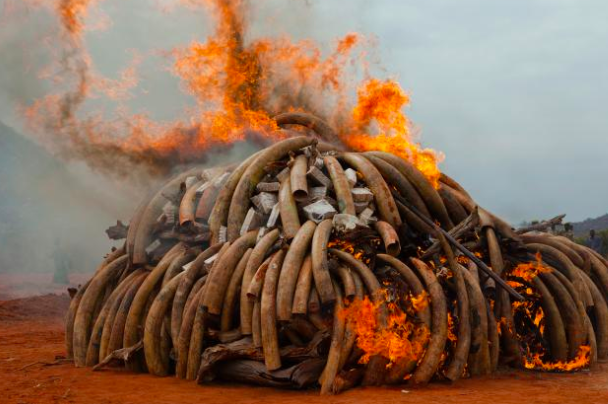
“If there’s demand, there will be supply. And it’s not going down any time soon.”
 Recently, I’ve been reading Poached, by Rachel Love Nuwer, an investigation into the illegal wildlife trade. Important to consider is the idea that if these living beings were human we would not be calling it simply “illegal wildlife trade,” but genocide, if not xenocide, and all for the sake of meat, medicine, trophies, wealth, and status.
In this regard, humans represent both the greatest threat to wildlife, as well as their greatest hope. The following represents just a few ways to stop poaching, trafficking, and the demand and investment that together inflict misery on the nonhuman earth community:
Reasons for Demand
Magical Thinking – One big realization Nuwer’s work provokes is the magical thinking that drives demand, whether we are talking about the magical “potions” or medicines used to “cure” sickness, but also the general symbolism around which consciousness organizes itself. In this regard, imagination and will become the battlefield, where the future will be decided by how well we can change consciousness, will, imagination, and the reality of species extinction, which in many ways is driven for the sake of the placebo effect, since most animal killings and trade are for body parts that offer no medical benefit.
Psychedelic Species – Those animals that have psychedelic properties have in many places been incorporated into religious traditions, yet with the globalization of capitalist consumption, and the psychedelic revolution, these animals have become targets for psychedelic tourism, commodified and consumed, driving their numbers down.
Cultural Traditions– Undoubtedly, there is a long tradition of using animals for various reasons, that are deeply embedded psychologically and culturally. These traditions are intergenerational, requiring both rupture as well as new cultural innovations that can fill the psychological roles wildlife has filled.
Sport Hunters/Collectors– Along with cultural traditions, collectors of trophies drive the market in their affinity for and affection of products. In a sense, this is the commodification of cultural tradition, and the possession of tradition through personal property.
Exploitative Outlets for Expressing the Love of the Exotic Wild – This is closely related to the two prior reasons, namely there is an affinity for the wild, which is understandable. And yet, it seems in many cultures, the killing of animals for the sake of possessing an icon of the wild is perhaps the only way many feel they can achieve closeness in socially acceptable ways.
Status – When it comes to meat, trophies, or turning wild animals into domestic pets, the dominant theme seems to be the status one signals in consuming animals whose rarity means they are expensive.
Revenge Killings for Destroying Livestock/Crops – Wild animals do not respect artificial boundaries that human systems have concocted, and as such act naturally – eating food where it is available. When subsistence or commercial farmers, ranchers, pastoralists depend on their livestock or crops, an animal eating this amounts to property destruction at best, and an existential threat at worst. Eradicating these “pests” is thus “logical” where one’s own existence seemingly competes with the wild.
Absence of Regulation – There are many reasons for this, for instance the cultural tradition already mentioned, the profits developing countries feel they need, government corruption that chooses not to enforce laws even if they do exist… In each case, the lack of legislation or enforcement signals to consumers that demand is legitimate, perpetuating the market for wildlife.
Anthropocentric Egocentrism (“Greed”)– This is, ultimately, the driving force behind the demand and supply, namely the willingness, even the necessity to put one’s own survival, and enrichment ahead of others. This is of course the driving impetus behind so many social problems beyond wildlife trade, seemingly conditioned and exacerbated by the commercial nature of a capitalist economy, where the industrial acceleration of extraction, processing, distribution, and consumption is not just an unfortunate consequence, but the very means by which incomes are generated to subsist and thrive.
Ignorance – The unsettling truth is that so many are simply unaware that their consumption hurts animals (as when people don’t realize tusks do not simply fall out of elephants but the animals are killed for them) and drives them extinct. This is to a degree a hopeful sign, as ignorance can dissipate where knowledge is provided.
Having gone briefly through some of the major reasons for demand, next I offer a quick walkthrough for reasons this demand is supplied.
Reasons for Supply
Capitalism/Scarcity and Profit – This is a basic fact that stems from the first premise of classical economics: “infinite demand in a finite world.” In this regard, scarce resources fetch higher prices where demand is high. The reasons for demand previously described drive species towards extinction, which only incentivizes trade in wildlife commodification. Extinction is actually embraced, as such developments would ensure monopolies over non-renewable resources. This should be seen as the general context that accelerates and intensifies all other reasons, a force multiplier for wildlife poaching, trafficking, and consumption
Lack of Economic Opportunity – Without good paying jobs, people are forced into desperation. In these circumstances, killing wildlife may be the difference between feeding oneself and one’s family and starvation.
Social Strife – When conflict ensues, militarized factions fuel their organizations by entering markets that provide them with resources necessary to sustain themselves. Illegal wildlife trade provides a means to ensure the flow of food, weapons, and supplies in this regard.
Western Lifestyles – The desire to enrich oneself is understandable perhaps, and increasingly normalized. This is further incentivized by images of western lifestyles, that promote obscene levels of wealth and consumption. As such, the tendency to liquidate a nation’s natural resources for the sake of development is common, depleting the very resource base, including wildlife, needed to ensure healthy ecosystems on which vibrant economies depend.
The Internet – The internet too is a force multiplier, not only allowing easy entry into wildlife markets, but establishing global trade while accelerating demand. In this regard, markets expand, while species decline.
Media – Like the internet, the media promotes demand, while facilitating trade by advertising supply. If there is money to be made, media is similarly incentivized to promote prosperous industries, and the symbiotic nature of these industries accelerate wildlife destruction.
Charismatic Personalities – Major personalities bolster demand, reinforcing the status-increasing assumptions by normalizing wildlife trade. Popular personalities who enrich themselves through trafficking attract others to do the same, providing the sense of lucrative opportunities.
Hunting Tourism – Where countries or organizations seek ways to develop income, industries organized around hunting wildlife may arise. As with any business, it seems there is a willingness to make profit at the expense of long-term sustainability.
Wild Animals are Healthier than Farmed Animals – When it comes to medicine, meat, or trophies, wild animals are generally understood to be more “potent,” tastier, or attain higher status than domestic ones. Whether this is because they are more expensive, are associated with novel images of the wild, or whatever, the simple fact is wild animals are more desired and sought after than domestic animals and as such, drive supply.
With supply and demand briefly described, solutions lend themselves to those interested in disrupting the trade. These solutions are myriad, and should be understood to exist at all steps of the wildlife trade. Further, as there are different actors with different constraints, these actions range from legal to illegal action, meant only provide a sense of what could be done to reduce the trade.
A Few Possible Solutions
Shut Down Markets, Ban the Wildlife Trade Entirely – This results in a rapid drop of supply and demand, while eliminating the ability for legal and illegal products to converge in the same markets, distorting markets through unclear and confusing nuance.
Enacting Strict Regulations – Ending illegal activities is one thing, but making legal harms against wildlife and the environment illegal is another. When much of the activities driving wildlife extinct in the first place is legal, governments need to enact legislation addresses the underlying factors in the first place, essentially shutting down the markets as quickly as possible.
Establish and Ensure Anti-Corruption Measures at All Levels – Whether it is rangers protecting animals, police who look the other way, government officials who facilitate international trade, etc. or legislators who are paid off by companies who have a stake in wildlife trafficking, measures need to be put in place that have zero-tolerance for corruption that jeopardize the wellbeing of plants and animals along with their futures.
Ensure Harsh Penalties – So often, wildlife crimes, even if uncovered and prosecuted, are not punitively effective. Small fines, lack of jail time, all of these signal to criminals that the risk is worth it. As such, there becomes little reason to get out of the lucrative market.
Enforcing the Convention on International trade in Endangered Species – While CITES offers an international framework to protect wildlife, like many international agreements, there are few ways to enforce decisions due to the paradigm of national sovereignty. Without the possibility of adequate enforcement there is simply no way to ensure any decision will be effective. Providing enforcement mechanisms will be key to ensuring uniform transnational standards for wildlife protection that all countries must follow.
Harsh Economic Sanctions – Economic sanctions on countries that refuse to disengage in wildlife trafficking will be an important tool to reduce trafficking. The choice to trade in wildlife must be understood to be at the expense to trade internationally, with monitors ensuring compliance.
Bolstering Enforcement and Intelligence Capacity – This is the most obvious step, simply equipping enforcement and intelligence organizations with adequate resources. Often there is too little funding or interest from governments who may themselves benefit from trafficking, while those cartels engaged in such illicit activities may be better equipped than government forces. In this regard, ensuring enforcement and intelligence through humint, finint, osint, geoint, sigint, allint, etc. can match and exceed poachers, traffickers, and sellers at distribution sites through adequate funding is the first step to consider.
Destroying and Degrading the Criminal Ecosystem – It is no surprise that wildlife poaching, trafficking, and commercial sales are only one part of a much wider criminal ecosystem. Cartels and syndicates engage in a host of operations. In this regard, infiltrating and disrupting these operations will likely degrade the wider capacity of such groups, so that systems and infrastructure can be decisively dismantled.
Cultivate Informants – A common technique of intelligence gathering, informants have the potential to disrupt and destroy complex organizations from the inside. Encouraging and incentivizing key actors to turn their backs on destructive practices and the institutionalized violence against those most vulnerable will be necessary for intelligence and law enforcement organizations with wildlife protection priorities.
Funding Prosecutions – Along with enforcement and intelligence operations, funding prosecutions is a critical step in order to ensure the trade is disrupted and destroyed. Prosecutors often times are working with limited resources and therefore must prioritize their objectives. Ensuring there is adequate support for these cases must be promoted as a high-level priority.
Training Criminologists, Lawyers, Officers, Prosecutors, and Rangers – Funding is one thing, training is another. Balancing the quantity of expertise with quality exponentially increases the effectiveness of each actor in the anti-wildlife trafficking network.
Funding Non-Government Institutions – As mentioned, government may not always be an ally to anti-trafficking activities. As such, adequately funding non-state institutions may provide needed resources to those who do have an interest, which can lead to public pressure campaigns, information sharing, and programs that have disruptive effects on the industry.
Lobbying Efforts – It is no secret that wildlife advocates do not even approach the political power attained by those industries with stakes in extraction and exploitation. Still, finding ways to build capacity and leverage it into real-world action is a critical step in legislating on behalf of animals.
Donating to Refuges, Parks, Sanctuaries, and Rehabilitation Centers – As these areas are where the animals are, there should be adequate support given to those most directly engaged with animals, whether robust defenses are instituted, or campaigns designed to foster emotional connections with the wild are designed, or rehabilitation and release programs are both sensible and effective, guided by well-established and respected expertise.
Make Living Animals Worth More than Dead Animals – Admittedly, this may require some creative innovation in a culture and economy where the commodification of life into dead products is usually the norm. However, eco-tourism is one way to capitalize on living animals. More problematic is the idea that Rhino horns can be cut off and grow back, meaning a long life offers more product. However, it may simply be the case that in recognizing these living creatures fill critical ecological roles incentivizes humans to protect these species to ensure a vibrant, resilient ecosystem in which they community members as well, their economy dependent on intact relationships.
Education Campaigns – When it comes to consumers, as mentioned, many are simply ignorant or unwilling or unable to break out of cultural patterns. Education campaigns designed to make patients and doctors aware of the potentially harmful side effects of medicines made from wildlife, or creating strategies that disrupt the patriarchal advertising of wildlife as a status symbol, can each help to change the culture in ways that encourage care for regional communities of life. Specifically targeting younger generations can help to normalize values like care and respect for wildlife through protection and compassion can break cycles of wildlife abuse before it is habituated.
Symbolic Stigmatization – If we are a symbolic species, then symbols offer effective ways to get messages across. Burning tusks or horns in order to signal publicly that such products are worthless and those who engage in the trade are similarly worthless can help stigmatize the trade, at both ends of the supply and demand process. These tap into powerful emotions which can be leveraged towards establishing social norms.
Share Medical Technology and Intellectual Property – Sharing innovations in techniques to ensure health seems obvious, but defies notions of proprietary information and competitive advantage. Without access to technology and information, developing countries, doctors, and patients are incentivized to draw from alternative resources that are available, like wild animal parts. Making medical innovations and health information available would likely reduce dependency on wild animals.
Start Social Media Conversations – This is a simple but effective beginning point. As mentioned before, often times the invisibilization of wildlife crimes, or the trauma, abuse, and suffering of animals is simply left unknown. Moreover, the cultural inertia of wildlife poaching, trafficking, and consumption may be taken for granted and accepted as tradition. Breaking with these patterns by speaking out and signaling resistance and opposition provokes controversy, conversation, consideration, and, hopefully, reconciliation. This can be complemented with pictures, stories, resources, and general advocacy.
Sell Wildlife Products Legally and Humanely to Fund Defense – More controversial no doubt is the possibility of utilizing animals in ways that are humane and contribute to protection. Wild game meat can be processed and sold for consumption when culling is necessary to maintain optimal species levels. Similarly, as previously mentioned, Rhino horns are renewable and, if the illicit market is shut down and rhino caretakers are given permits to cut these horns, it is argued these rhinos are protected, and the extreme scarcity of these products can fetch high prices to be utilized to further fund adequate defenses. There are problems with this however, namely that a legal market can entice illegal vendors who mix illicit products into the market place, while the “farming” of wild animals can be just as inhumane, requiring a number of other controls that can become far too complex very quickly. Further, the domestication of wild animals for the sake of species restoration is problematic to say the least.
Rewilding Regions – Rewilding land constitutes one of the more effective approaches to species restoration. Whereas many other solutions are defensive tactics it seems, restoration of vast swathes of land (cores, corridors, carnivores) provides a way to increase numbers of endangered species to safe numbers. Moreover, as habitat loss is a key driver for species extinction and climate change, rewilding offers the opportunity to address multiple issues at once.
Address Desperation, Inequality, and Colonial Development – If a major driver of poaching is extreme deprivation due to the social circumstances, this requires systemic approaches to poverty alleviation in order to ensure a zero-sum game between human and nonhuman does not occur. Often, this deprivation is due to colonialism, imperialism, globalization, and capitalism, though it is worth considering megafaunal extinctions of the past to thoroughly anticipate motivations and effects of the simple impulse to survive and thrive. Alternative economic opportunities that decrease the desirability and likelihood of wildlife poaching, trafficking, and commercial sales should be considered and cultivated.
Destroy products – While such actions may not address supply or demand, it does take products off the market, while signaling to poachers, traffickers, and consumers an unwillingness to tolerate the trade.
Hack and Destroy – Whether this includes DDOS attacks on sites where trafficking is known to take place, doxing those known to engage in illicit trade, defacing or hacking sites to bring attention to corruption, or simply infiltrating networks to expose the nature of the trade, digital hacktivism is a non-violent approach to disrupting and destroying trade networks and market places.
Satire and Ridicule – Like stigmatization and starting conversations, satire and ridicule plays on emotions like shame while pointing out hypocrisy, immorality, and intolerable behaviors in ways that demand structural reform, apologies, and compensation. Another nonviolent approach, such techniques use free speech, humor, and cultural critique to create moments of opposition that resonate throughout society.
Killing People – While no doubt the most extreme approach to preventing poaching and species extinction, governments are implementing kill-on-site orders for poachers, and equipping rangers with lethal weapons. While this certainly raises the stakes for those on the supply side, it should be noted that those engaged in poaching are usually the poorest, most marginalized actors in the supply chain, often forced into these roles by a cultural context that has generated a lifetime of hardship. In this regard, advocating for the state murder of oppressed people is hardly a sustainable solution, representing a desperation of the state itself which has run out of options. Militarization promotes dehumanization, death, and more poverty, with state-sanctioned violence against people of color leading to brutality, rape, PTSD, and new cycles of violence.
That said, it is perhaps conceivable that as species continue to be driven extinct, those actors responsible will be exposed, with non-state actors retaliating against them on behalf of the dead.
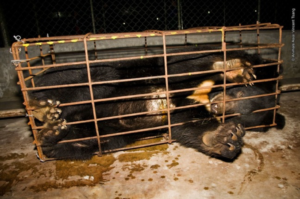
Emotional Connection – Perhaps the most important approach to solving these issues is fostering, cultivating, and provoking emotional connections between human and non-human animals. To do so may eliminate most of the causes and consequences of wildlife trafficking. “Farms” for instance, where animals are caged in prisons and forced to undergo surgery to extract bile, are examples where the mass production of wild animal products creates untold suffering. Addressing this requires providing opportunities to make connections so that such activities is unthinkable.
Unite Police, Intelligence, Customs, Rangers, Policy Makers, NGOs, and the Public into an Ongoing Conversation- This is obvious, yet perhaps the hardest solution to solidify. Anti-wildlife actors are currently fragmented, with competition and corruption often times disrupting any collaborative approaches they might otherwise engage in.
A Fully Politicized Naturalism – When it comes to the culture we today exist within, we must admit that profits are held in higher esteem than people, let alone the rest of the planet. This reality derives from the core focus we have on capital and property, the primary values our political economy holds above all else. Yet this is not necessarily the value held by most people, in which case those who hold the planet and the lives of its constituent members in higher esteem need to mobilize, organize, and wield power in ways that achieve political objectives.
Deindustrialize – The industrial hubs of the world are the evolutionary pressure cookers of capitalist agriculture and urbanization, the medium by which life is processed into death, driven by global commodity circuits that define capitalist economic geography. These evolutionary pathways are the routes by which we accelerate towards a future with decidedly less biodiversity. Slowing down this journey requires smaller population sizes and densities to reduce rates by which these commodities are transported across and within national boundaries. High throughput fuels the death of the planet.
Environmental crime, after cyber, is the biggest criminal industry around – wildlife trafficking, timber, fish, carbon emissions and markets… it is the sector that is most rapidly transforming natural selection into a kind of dysfunctional mutation of what sets our planet apart from every other in the known universe – life itself.
While this is certainly not an exhaustive list of causes or solutions, by beginning to crime-proof legal mechanisms that can render wildlife trafficking a distant memory, we can perhaps enter into more reciprocal relationship with our non-human companions in the wider earth community.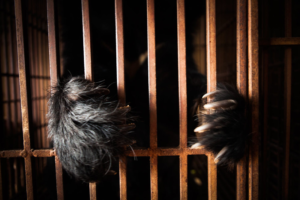 http://tgbarker.com/the-bear-bile-trade-wildlife-trade-vietnam-photographer
 https://greenglobaltravel.com/interview-jill-robinson-animals-asia-foundation/